Glass Vac Vacuum Chamber - Aluminum or Stainless Steel
Description
Description
Glass Vac™ Vacuum Chambers — Aluminum & Stainless Steel
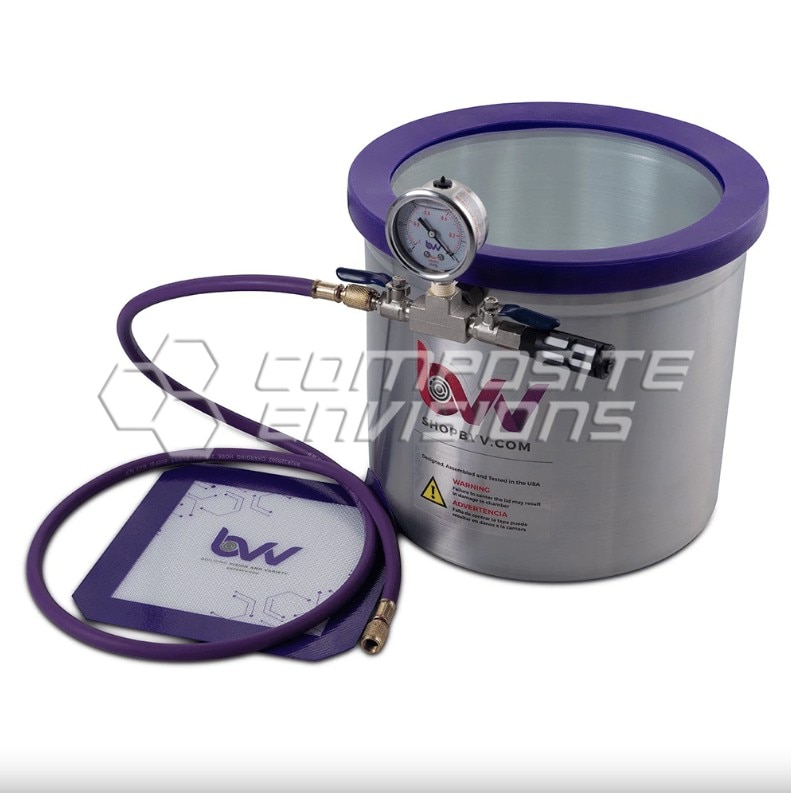
Our Glass Vac vacuum chambers are complete, shop-ready systems designed, built, and 100% tested in the USA. A unique, reversible industrial-grade silicone gasket (no adhesives) lets the tempered glass lid seal even if set slightly off-center, and doubles gasket life. Every chamber is helium/vacuum tested prior to shipping to ensure a leak rate of no more than 2.5 inHg per 24 hours and to verify a max vacuum of ~-29 inHg (±0.5 inHg at sea level). Components are rated for elevated temperatures; as a vacuum vessel the maximum operational temperature is 160 °F (the gasket itself withstands up to ~390 °F). Lids can be cleaned with common solvents.
Sizes & Materials
- Aluminum chambers: 2 gal, 3 gal, 5 gal
- Stainless steel chambers: 1 gal, 1.5 gal, 3 gal
See individual product pages for internal height/diameter and exact kit contents.
What’s Included (typical kit)
- Tempered glass lid with reversible silicone gasket (≈60A durometer)
- Glycerin-filled vacuum gauge (regulated on arrival)
- Nickel-plated, leak-free air manifold with vacuum release & connect valves
- Universal 1/4″ flare pump adapter for common vacuum hoses
- 5 ft clear steel-reinforced vacuum hose
- 8″ × 8″ platinum-cured non-stick VacPad
- 50 micron air intake filter
- Full instructions for setup and use
Why Glass Vac
- Reversible gasket and simple, serviceable design—no adhesives
- High visibility through the glass lid for process monitoring
- Reliable sealing and durability—designed for up to 10,000+ uses with proper care
- Manufacturer recommends and warranties Glass Vac for resin infusion and wood stabilization; compatible with common solvents and stabilization resins
Typical Uses
- Degassing epoxies, urethanes, and RTV silicones
- Vacuum bagging/infusion setup and resin conditioning
- Wood stabilization and material drying
Operating Notes
- Do not exceed 160 °F operational temperature for the chamber.
- Performance depends on pump capacity, ambient conditions, and setup quality.